The Breathing Technique That Stops Cold Plunge Panic in the First 20 Seconds
Quick Answer: Exhale longer than you inhale — try a 4-second inhale, 8-second exhale — the moment cold hits your chest. This overrides the involuntary gasp reflex that causes the panicky, can’t-catch-my-breath feeling in the first 20-30 seconds.
You ease in confidently, then the cold hits your chest and your breath goes ragged and shallow, heart racing, and every instinct says get out now. That response is called the cold shock response, and it’s controllable with one specific technique.

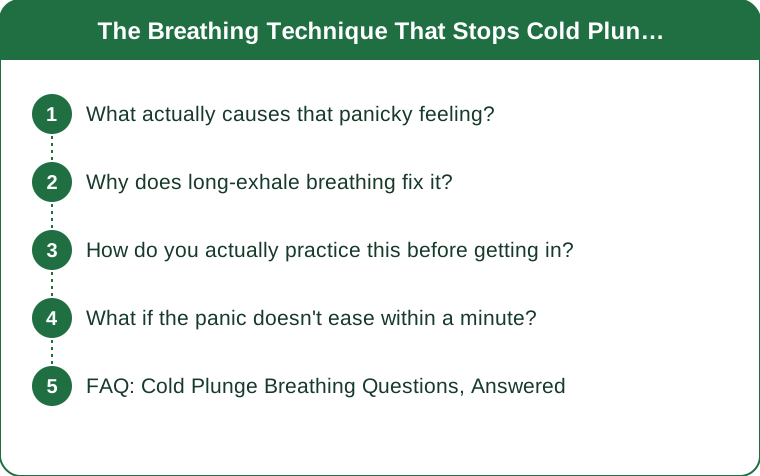
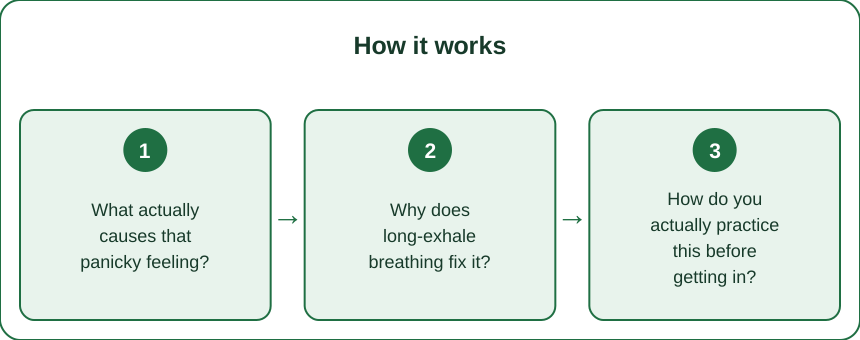
What actually causes that panicky feeling?
Cold water triggers an involuntary gasp reflex and rapid, shallow breathing as your body’s automatic response to sudden cold on the skin and chest. This is a reflex, not a sign of low tolerance — everyone experiences some version of it, including people who’ve plunged for years.
Why does long-exhale breathing fix it?
A longer exhale than inhale activates your parasympathetic nervous system (the calming counterpart to the panic response), directly counteracting the sympathetic “fight or flight” surge the cold triggers. This is the same mechanism used in panic attack breathing techniques — it works on the nervous system, not just distraction.

How do you actually practice this before getting in?
Practice the 4-count-in, 8-count-out rhythm on dry land first, several times, so it’s automatic before cold makes thinking hard. The moment you’re in and the gasp hits, don’t fight it — let the first breath be ragged, then deliberately extend the next exhale.
What if the panic doesn’t ease within a minute?
Get out. The technique should noticeably calm the response within 20-30 seconds — if it’s not working and distress is increasing rather than easing, that’s your body telling you this isn’t the day, not a failure of willpower. There’s always a next session.
FAQ: Cold Plunge Breathing Questions, Answered
Does the gasp reflex go away with experience?
It lessens in intensity over weeks of consistent practice, but rarely disappears completely — even experienced plungers manage it, they don’t eliminate it.
Should I hold my breath instead of controlling it?
No — breath-holding tends to worsen panic; controlled, longer exhales work with your nervous system rather than against it.
Is it normal for my heart rate to spike in the first 30 seconds?
Yes, a rapid initial heart rate increase is a normal cold shock response — it should begin settling within the first minute as breathing calms.
TL;DR:
- The first-seconds panic is an involuntary gasp reflex, not a tolerance failure
- Exhale longer than you inhale (try 4 in, 8 out) to calm the nervous system fast
- Practice the rhythm on dry land first so it’s automatic under cold stress
- If panic isn’t easing within 30 seconds, get out — there’s always next time
Keep Reading
This article is for general informational purposes only and is not medical advice. Always consult a qualified health professional for guidance specific to you.