Why Your First Cold Plunge of Autumn Feels Easier Than July's
Quick Answer: The water may be the same temperature, but you are not. Cooler air means a smaller skin-to-water temperature gap, your skin temperature is lower before you get in, and a summer of exposure has blunted the cold shock response. The thermometer stayed still; three other variables moved.
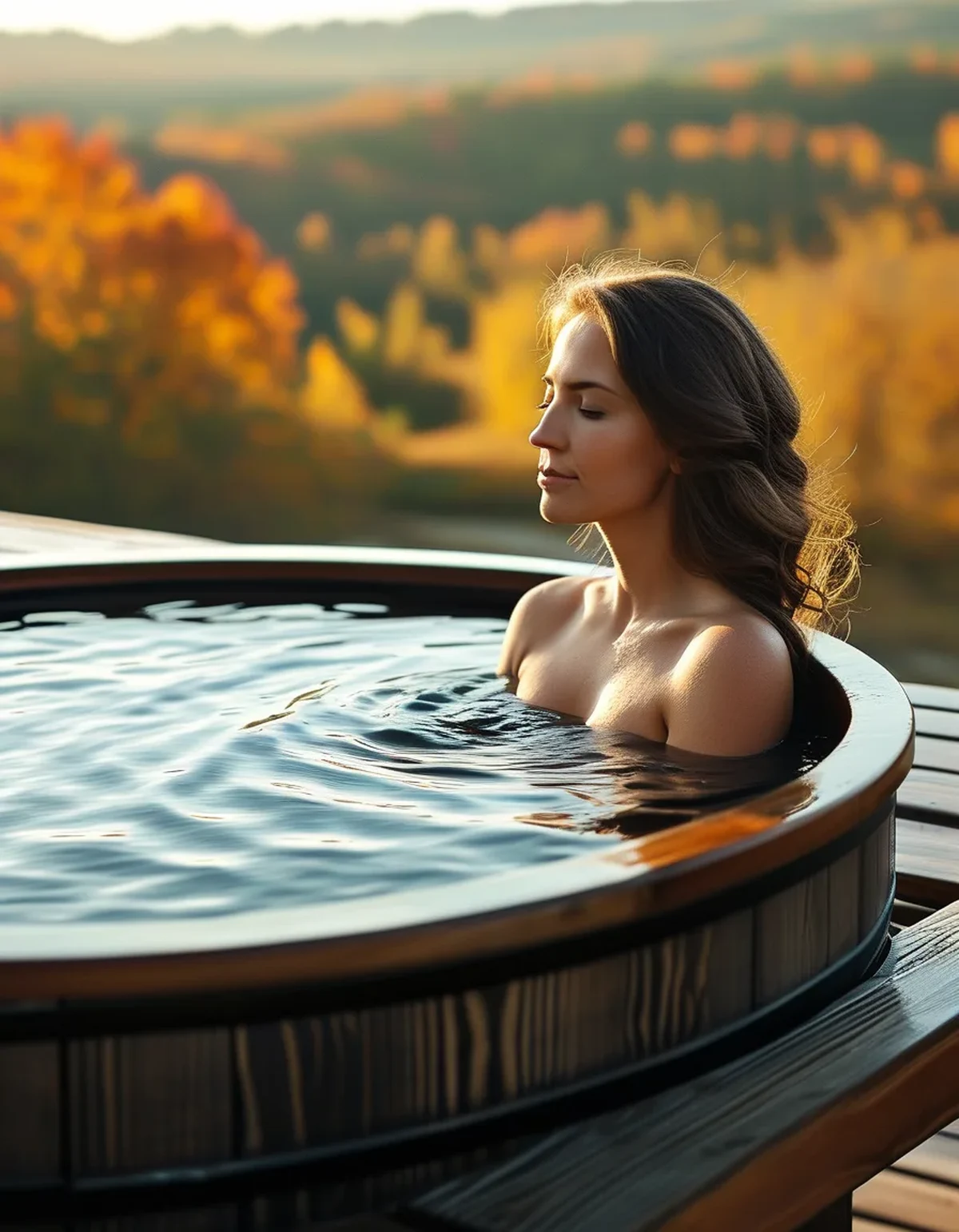
It is 52°F, exactly as it was in July, and this time you got in without the gasp and stayed the full three minutes without negotiating with yourself.
Why does the same temperature feel different?
Because what you feel is not temperature — it is rate of heat loss, and that depends on the gap between your skin and the water.
In July, you arrive at the tub with skin that has been sitting in 85°F air. Skin surface temperature might be 93-95°F, with blood vessels dilated to shed heat. The gap to 52°F water is enormous, and the drop is nearly instantaneous.
In late September, you arrive in 58°F air. Your skin is already cooler, peripheral vessels are already partly constricted, and the gap is smaller. The same water produces a slower rate of heat loss at the skin.
The cold shock response scales with rate of change, not absolute temperature. Slower change, smaller gasp.
What is actually happening in the first 30 seconds?
The cold shock response — an involuntary gasp, a sharp jump in breathing rate, and a spike in heart rate and blood pressure. It peaks in the first 30 seconds or so and settles substantially within a couple of minutes.
It is worth respecting rather than treating as a mental hurdle. The involuntary gasp is the reason unexpected cold water immersion is dangerous — a gasp underwater is a real risk, not a metaphor.
The useful part: this response habituates faster than almost any other cold adaptation. A handful of exposures measurably blunts it, and the effect persists for months.
So by late summer, you are carrying a season of habituation into the water with you. That is a genuine physiological change, and it is the largest single reason autumn feels easier.
Myth vs Fact: cold plunge temperature
Myth: Colder is always better. Fact: There is no strong evidence for a magic temperature. What matters more is consistency and total exposure time. Chasing lower numbers mostly increases risk without a clear payoff.
Myth: If it feels easy, it stopped working. Fact: Easier is adaptation, which is the intended result. You do not need the experience to be terrible for it to be doing something.
Myth: The air temperature does not matter, only the water. Fact: Air temperature sets your starting skin temperature and dominates the rewarming phase afterward. In autumn, getting out is often harder than getting in.
Myth: You should always go longer as you adapt. Fact: Time in cold water is not a score. Most protocols land in a modest total per week, and stacking more has diminishing returns and increasing risk.
What changes about getting out?
This is the part autumn genuinely makes harder, and it catches people out.
In July, you step out into warm air and rewarm passively in minutes. In October, you step out of 52°F water into 55°F air, often with a breeze. Evaporative cooling from wet skin in moving air removes heat fast, and your core temperature can continue falling after you exit — the afterdrop.
Practical adjustments:
- Dry immediately and completely, starting with the torso. A towel within arm’s reach, not across the deck.
- Layer straight away, including something on your head.
- Move gently. Walking or light movement rewarms. Vigorous exercise straight out of cold water is not the move.
- Something warm to drink helps more psychologically than thermally, which is still worth having.
If you shiver uncontrollably for a long time afterward, that is a signal you went too long or too cold for the conditions.
How should the protocol change for the season?
Mostly it should get shorter as the ambient temperature drops, which is the opposite of what people assume.
A reasonable autumn approach:
- Keep the water temperature where it was. Do not chase colder just because it feels manageable.
- Shorten slightly if the air is cold. A 3-minute July plunge might sensibly become 2 minutes in 50°F air with wind, because the rewarming phase is now doing real work.
- Frontload the week. Morning plunges on cooler days give you a full day of ambient warmth to recover in.
- Set up the exit before you get in. Towel, layers, and shoes within reach.
And the standing caveats: never plunge alone, never after alcohol, and if you have any cardiovascular condition, are pregnant, or have any concern at all, talk to a doctor first. This is general information, not medical advice.
TL;DR:
- The same water feels easier in autumn because your skin starts cooler, so the rate of heat loss is lower.
- The cold shock response habituates quickly and persists — a summer of exposure carries forward.
- Getting out is the harder half in cool weather; afterdrop and evaporative cooling do real work.
- Shorten rather than lengthen as ambient temperature drops, and set up your exit before you get in.
If the plunge has started to feel almost pleasant, that is adaptation working exactly as intended. The temptation is to go colder or longer to restore the difficulty. The more useful response is to keep the stimulus the same and pay attention to the rewarming half, which is the part the season actually changed.
Keep Reading
This article is for general informational purposes only and is not medical advice. Always consult a qualified health professional for guidance specific to you.