Why a Consistent 55°F Plunge Beats an Occasional 39°F One
Quick Answer: A consistent cold plunge routine at a manageable temperature (50-59°F) done regularly builds more cumulative benefit than rare, extreme-cold sessions (39°F or below) that are hard to sustain — adherence matters more than intensity for most cold exposure benefits.
Extreme cold plunge numbers get the attention online, but most of the research-backed benefits — mood, alertness, stress resilience — come from regular exposure, not from how close to freezing the water gets.

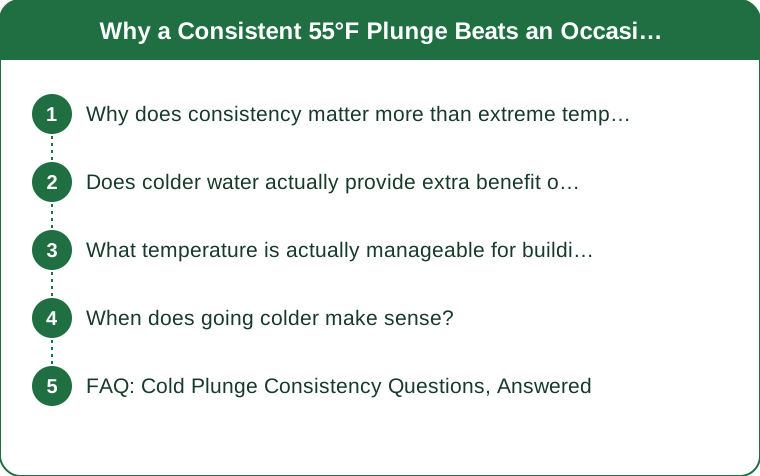
Why does consistency matter more than extreme temperature?
Many of cold exposure’s documented benefits — norepinephrine release, mood improvement, stress adaptation — build through repeated exposure over weeks, not from a single very cold session. A person plunging at 55°F three times a week accumulates more total adapted exposure than someone attempting 39°F once every two weeks because it’s uncomfortable and hard to schedule.
Does colder water actually provide extra benefit once you’re already cold-adapted?
There’s a point of diminishing returns — once water is cold enough to trigger the core physiological responses (typically below 60°F for most people), going significantly colder doesn’t proportionally increase benefit, but it does proportionally increase how hard the session is to complete and sustain regularly.

What temperature is actually manageable for building a consistent habit?
50-59°F is a commonly used range that’s cold enough to trigger real physiological response while remaining sustainable for 2-3 minute sessions several times a week for most reasonably fit adults. Starting here, rather than at extreme cold, is what actually supports building the habit long enough to matter.
When does going colder make sense?
Once a consistent routine at a manageable temperature feels easy — the discomfort barely registers anymore — gradually decreasing temperature can reintroduce a fresh stimulus. This progression matters far less than most content suggests; plenty of people plateau happily at 55°F indefinitely with full benefit.
FAQ: Cold Plunge Consistency Questions, Answered
Is a cold shower a legitimate substitute for a cold plunge?
A cold shower is a reasonable, more accessible alternative that provides similar consistency benefits, even though full-body immersion is generally considered more effective per session.
How many times a week is ‘consistent’ for cold plunging?
2-4 times a week is a commonly cited range for building and maintaining the cumulative benefits associated with regular cold exposure.
Will I lose the benefit if I take a week off?
A short break won’t erase the adaptation, but benefits are generally tied to ongoing practice — returning to your regular schedule afterward matters more than perfect unbroken consistency.
TL;DR:
- Most cold plunge benefits build through repeated exposure, not extreme single-session cold
- Going colder than roughly 60°F shows diminishing extra benefit for most people
- 50-59°F is a sustainable range for building a consistent habit
- Lower the temperature only once the current routine feels easy, not before
This is general information, not medical advice — anyone with cardiovascular conditions should check with a doctor before starting cold exposure.
Keep Reading
This article is for general informational purposes only and is not medical advice. Always consult a qualified health professional for guidance specific to you.