What to Actually Do in the First 30 Seconds of a Cold Plunge (It's Not What You Think)
Quick Answer: In the first 30 seconds of a cold plunge, focus entirely on slow, controlled exhales rather than trying to control the shock itself — fighting the urge to gasp is the actual skill, and long exhales are what make that possible.
Everyone talks about cold plunge benefits, almost nobody explains that the entire experience is decided in the first half-minute — get through it right, and the rest of the session is manageable.

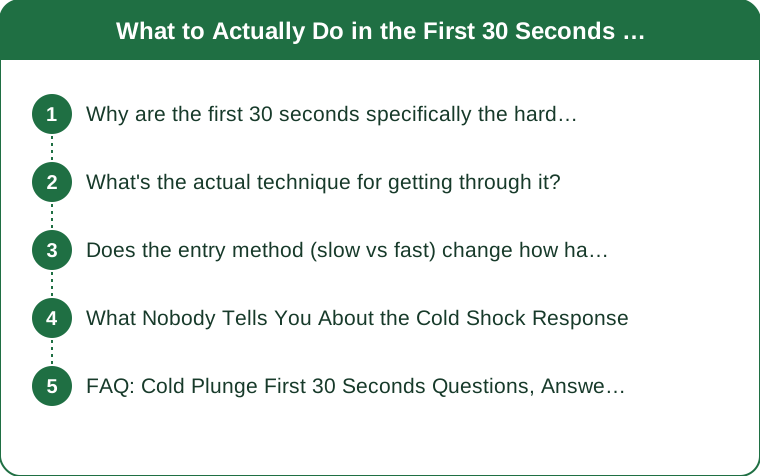
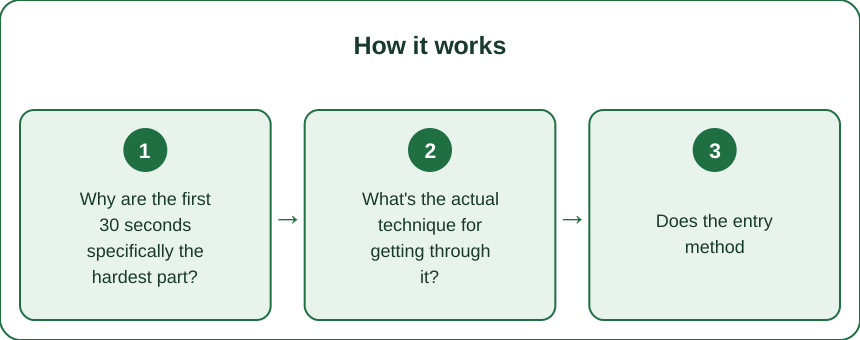
Why are the first 30 seconds specifically the hardest part?
Cold water immersion triggers an involuntary ‘cold shock response’ — a sharp gasp reflex and rapid breathing that peaks in the first 30-60 seconds before naturally subsiding as the body adjusts. This response is automatic, not a sign of weak tolerance, and it affects experienced cold plungers too, just less intensely.
What’s the actual technique for getting through it?
Focus on making your exhales longer than your inhales — a 4-second inhale followed by an 8-second exhale, repeated, keeps the nervous system from escalating into full panic-breathing. Trying to simply ‘push through’ without a breathing focus is what makes people bail out early or panic.

Does the entry method (slow vs fast) change how hard the first 30 seconds are?
Both approaches work for different people — a fast entry gets the shock response over with in one intense burst, while a slow entry spreads the discomfort out but avoids the single sharp jolt. Neither is objectively better; the breathing technique matters more than which entry style you choose.
What Nobody Tells You About the Cold Shock Response
Most cold plunge content focuses on the benefits (recovery, mood, circulation) and treats the entry itself as an afterthought. In reality, the entry technique is the single biggest factor in whether someone sticks with cold plunging at all — people who don’t have a breathing strategy for the first 30 seconds often have one bad experience and never try again, even though the technique to fix it is simple and learnable.
FAQ: Cold Plunge First 30 Seconds Questions, Answered
Is it normal to want to gasp uncontrollably at first?
Yes, this is the cold shock response and it’s universal, even among people who’ve been cold plunging for years — the goal is managing it with breath control, not eliminating the urge entirely.
Does it get easier after the first 30 seconds, or does the discomfort stay constant?
For most people the sharpest discomfort noticeably eases after the first 30-60 seconds as the initial shock response subsides, even though the water is obviously still cold.
Should I talk to someone or plunge in silence?
Whichever helps you maintain slow exhales — some people find a training partner counting breaths out loud helpful, others find it more distracting than doing it silently and internally.
TL;DR:
- The first 30-60 seconds trigger an automatic cold shock response — a gasp reflex that affects even experienced plungers
- Long, controlled exhales (longer than the inhale) are the actual skill that gets you through it
- Fast vs. slow entry is a personal preference — breathing technique matters more than entry style
- The sharpest discomfort typically eases noticeably after that first half-minute
Next plunge, count your exhale to 8 the moment you feel the urge to gasp — that’s the whole technique.
Keep Reading
This article is for general informational purposes only and is not medical advice. Always consult a qualified health professional for guidance specific to you.