Cold Plunge for Women: How Cold, How Long, and What Actually Happens
Quick Answer: Beginners should start at 55-60°F (13-15°C) for 1-2 minutes, working toward 11 total minutes per week split across 2-4 sessions. Colder isn’t better — consistent is better. And women may respond differently across the menstrual cycle, so track how you feel, not just the thermometer.
The first 15 seconds are loud. Your breath grabs, your brain files a formal complaint, and every cell votes to leave. Then — if you stay with slow exhales — something flips around second 30, and the water stops being an emergency. That flip is the whole practice. Here’s how to get there safely, without the influencer theatrics.

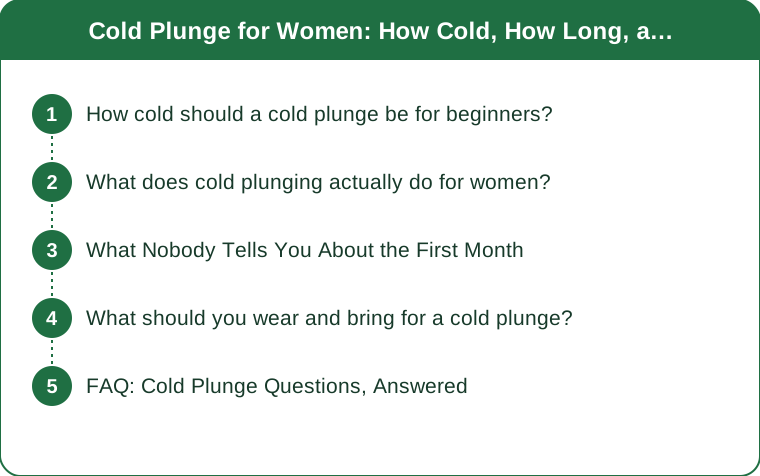
How cold should a cold plunge be for beginners?
Start at 55-60°F (13-15°C). That’s cold enough to trigger the norepinephrine response researchers measure — up to a 2-3x increase — without the shock risk of the 39°F ice-bath flexes you see online.
The often-cited weekly target is 11 total minutes, from the protocol popularized by Dr. Susanna Søberg’s research: think 2-4 sessions of 2-4 minutes each. More time doesn’t add more benefit; it just adds more shivering.
A meaningful chunk of the benefit shows up in the first 90 seconds. If a thermometer says 58°F and your timer says 2 minutes, you’re doing it right — no matter what the ice-beard guy on your feed says.
What does cold plunging actually do for women?
The well-supported effects: a norepinephrine and dopamine rise that many people describe as 2-3 hours of clean, calm alertness, reduced muscle soreness after hard sessions, and a trainable stress response — you’re literally rehearsing staying calm under stress.
The women-specific nuance: most cold-water research was done on men. Early evidence suggests women’s cold response shifts across the menstrual cycle — many women report the plunge feels notably harder in the late luteal phase (the week before your period). That’s not weakness; that’s physiology. Shorten the session or warm the water a few degrees that week.
One timing note for lifters: plunging within 4-6 hours after strength training may blunt some muscle-growth signaling. Plunge on rest days or before you lift, and there’s no conflict.
What Nobody Tells You About the First Month
Week 1 is 90% breath, 10% cold. If you can slow your exhale to 4-6 seconds, you can stay in. If you can’t, no amount of toughness helps.
The after-drop is real. You’ll feel fine climbing out, then colder 5-10 minutes later as chilled blood recirculates. That’s normal — have layers ready and skip the immediate hot shower; let your body rewarm itself for the metabolic benefit.
Your face matters more than your minutes. Dipping your face (or just splashing it) activates the mammalian dive reflex and slows your heart rate — it genuinely makes the plunge feel easier.
The habit beats the temperature. The person doing 2 minutes at 58°F three times a week gets more than the person doing one heroic 38°F session a month, then quitting.
What should you wear and bring for a cold plunge?
Keep it simple: a fitted one-piece or bikini you can move in — baggy fabric holds cold water against your skin. Neoprene booties and gloves are legit (extremities hurt first and adapt slowest); they’re comfort equipment, not cheating.
The kit: a timer you can see, a warm layer within arm’s reach (changing robe or oversized hoodie), warm socks, and a hot drink for after. In late summer, an outdoor tub at dawn is the move — the air is warm enough that the after-drop is gentle.
Safety non-negotiables: never plunge alone in open water, keep sessions under 10 minutes, and exit immediately if you feel numbness that spreads, blue-tinged skin, or dizziness. If you have any cardiovascular condition, Raynaud’s, or you’re pregnant, clear it with your doctor first — cold is a real cardiovascular stressor, which is exactly why it works and exactly why it deserves respect.
FAQ: Cold Plunge Questions, Answered
Is a cold shower as good as a cold plunge?
It’s about 70% of the practice at 0% of the cost. Showers can’t fully immerse you, so the response is smaller — but 30-60 seconds of cold at the end of your shower builds the same breath control and still delivers a mood bump.
Should I cold plunge on my period?
You can if it feels good — some women find it helps cramps. Many find their cold tolerance drops in the days before and during. Both are normal; adjust the temperature up or the time down.
Does cold plunging burn fat?
Modestly. Cold activates brown fat and burns extra calories, but the numbers are small — think ‘nice bonus,’ not ‘strategy.’ The mood, recovery, and stress-resilience effects are the real payoff.
TL;DR:
- Start 55-60°F, 1-2 minutes; build to ~11 total minutes per week
- Slow exhales are the skill — the cold is just the classroom
- Expect it to feel harder the week before your period; adjust, don’t quit
- Plunge on rest days or pre-lift to protect muscle gains
- Fitted swimwear, layers ready, never alone in open water
The plunge doesn’t get warm. You just get calm faster — and that skill follows you out of the tub.
Keep Reading
This article is for general informational purposes only and is not medical advice. Always consult a qualified health professional for guidance specific to you.