The Cold Plunge Temperature Mistake That's Making Recovery Worse, Not Better
Quick Answer: Most recovery-focused cold plunge benefits occur in the 50-59°F (10-15°C) range for 2-10 minutes — going significantly colder doesn’t proportionally increase benefit and raises risk of cold shock response and excessive vasoconstriction, meaning ‘as cold as possible’ is a common but counterproductive assumption.
Extreme cold gets treated as the goal, but the research on recovery benefit doesn’t actually support a ‘colder is always better’ relationship past a certain point.

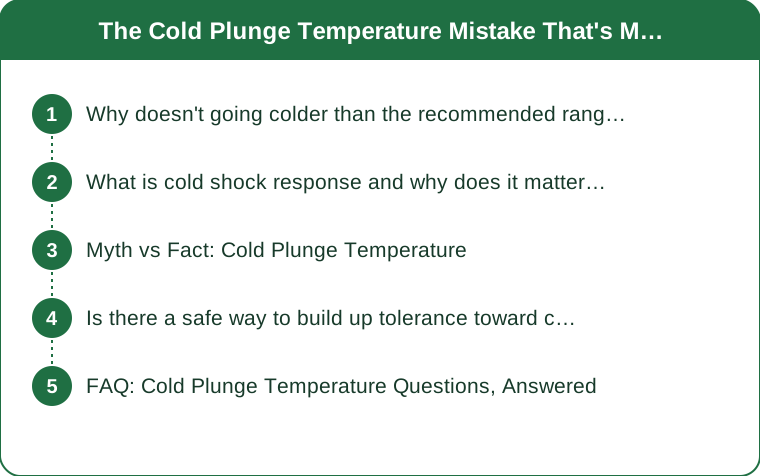
Why doesn’t going colder than the recommended range provide extra benefit?
The physiological responses associated with cold plunge recovery benefits — vasoconstriction, reduced inflammation markers, and the subsequent rebound circulation — plateau within the 50-59°F range, meaning temperatures significantly below that don’t meaningfully increase the benefit while substantially increasing cold shock risk and discomfort.
Extreme cold (below 45°F) also shortens the safe exposure duration considerably, which can actually reduce total beneficial exposure time compared to a more moderate temperature sustained slightly longer.
What is cold shock response and why does it matter for temperature choice?
Cold shock response is an involuntary reaction to sudden extreme cold exposure — rapid involuntary gasping, spiked heart rate, and hyperventilation — which becomes more pronounced and riskier at more extreme temperatures, particularly for anyone new to cold exposure or with any cardiovascular concerns.
Staying within the moderate recommended range significantly reduces this risk while still providing the recovery benefits associated with cold exposure generally.

Myth vs Fact: Cold Plunge Temperature
Myth: Colder water always means better recovery results. Fact: Benefits plateau around 50-59°F; going colder mainly increases risk and discomfort without proportional additional benefit.
Myth: Longer time in the cold plunge is always better. Fact: 2-10 minutes captures most of the researched benefit; longer exposure, especially at colder temperatures, increases risk without clear additional gain.
Myth: Everyone should aim for the same temperature and duration. Fact: Individual cold tolerance, cardiovascular health, and experience level should all inform appropriate temperature and duration, which vary meaningfully by person.
Is there a safe way to build up tolerance toward colder temperatures over time?
Yes — gradually decreasing temperature and increasing duration over several weeks, starting at a more moderate 59-60°F for shorter durations, allows the body to adapt safely rather than starting at an extreme temperature immediately, which carries higher cold shock risk for someone without prior exposure experience.
Many experienced cold plunge users started considerably warmer than their current routine and built tolerance gradually over months, rather than starting at the coldest setting available.
FAQ: Cold Plunge Temperature Questions, Answered
What’s a reasonable starting temperature for a complete beginner?
Starting around 59-60°F for 1-2 minutes is a commonly recommended, more conservative entry point for beginners before progressing colder or longer.
Are there people who shouldn’t do cold plunging at these temperatures at all?
Those with certain cardiovascular conditions should consult a doctor before starting cold exposure practices, given the cardiovascular stress cold shock response places on the body.
Does the recovery benefit differ meaningfully between 50°F and 39°F?
Most research doesn’t show a strong linear improvement below the roughly 50-59°F range, meaning the extra cold mainly adds risk and discomfort rather than proportional benefit.
TL;DR:
- Most recovery benefit occurs in the 50-59°F range for 2-10 minutes, not at extreme cold
- Going colder increases cold shock risk without proportionally increasing benefit
- Individual cold tolerance and cardiovascular health should inform temperature choice
- Building tolerance gradually from a moderate starting point is safer than starting extreme
‘As cold as possible’ isn’t actually the goal — a moderate, sustained range does the same job with far less risk. This is general information, not medical advice.
Keep Reading
This article is for general informational purposes only and is not medical advice. Always consult a qualified health professional for guidance specific to you.