Cold Plunging When the Water Is Already Cold: What Changes in Autumn
Quick Answer: As ambient temperature falls, outdoor water reaches plunge temperatures without cooling, and it keeps getting colder - which means the dose you were used to is now larger than you think. Shorten your times rather than keeping them, warm up passively afterwards rather than in a hot shower, and pay much more attention to the after-drop, which is a bigger risk in cold air than in summer.
The water getting colder for free is the appeal. It is also the reason autumn is when people get their cold exposure dose wrong.
This is general information rather than medical advice.

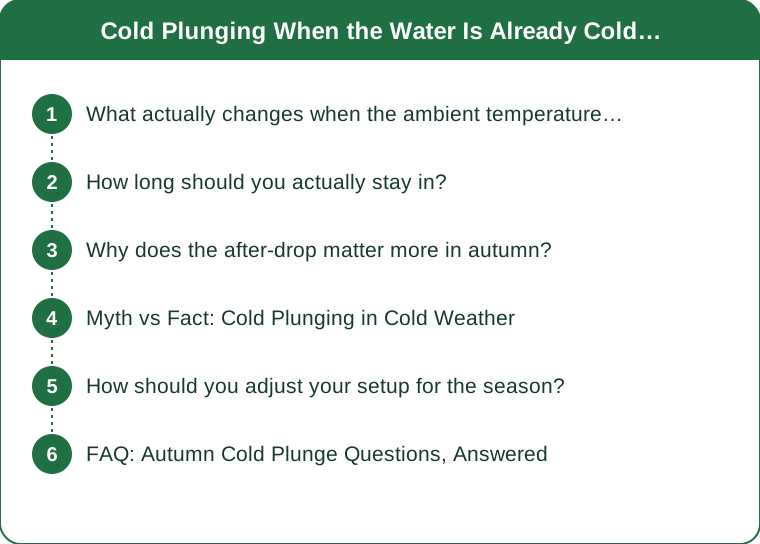
What actually changes when the ambient temperature drops?
Three things, and only one of them is the water.
The water gets colder, and keeps going. An outdoor tub tracks air temperature with a lag. Water that sat at 15C in August can drop through the low teens and into single digits over the autumn without any intervention. If your protocol was three minutes at 12C, and the water is now 8C, that is a substantially larger dose at the same duration.
The air is now cold too. In summer, you got out into warm air and rewarmed quickly and passively. In autumn, you get out into cold air, often with wind, which continues to pull heat out of you. The exposure does not end when you leave the water, and that is the fundamental change.
Your starting temperature is lower. Going into cold water already slightly cold from standing outside in a swimsuit is a different physiological event from entering warm and dropping. It shortens the time before shivering starts.
What this means practically:
- Reduce your time. Whatever you were doing at a warmer temperature, cut it. There is no benefit to matching your summer duration in colder water
- Measure the water rather than assuming. A cheap thermometer removes all guesswork, and the temperature will surprise you week to week
- Plan the exit, not just the entry. Where you dry, what you put on, and how long you are exposed afterwards now matter more than the plunge itself
How long should you actually stay in?
Less than you think, and the guiding principle is total dose rather than a fixed time.
A commonly cited framework from cold exposure research suggests something in the region of 11 minutes total per week of genuinely uncomfortable cold, spread across several sessions. That is a total, not a per-session target, and it is a rough guide rather than a precise prescription.
Rough duration guidance by temperature:
- 15C and above: several minutes is manageable for most experienced people
- 10 to 15C: two to three minutes is a reasonable session
- 5 to 10C: one to two minutes, and this is where most autumn outdoor tubs will land
- Below 5C: 30 to 60 seconds, and this is genuinely cold water requiring real caution
These are not targets to hit. They are ceilings to stay under. Getting out early is always the correct decision and it costs you nothing - the adaptation comes from repeated exposure, not from endurance within a single session.
Signs to get out immediately:
- Loss of sensation or dexterity in hands and feet
- Shivering that becomes violent or uncontrollable
- Any confusion, slurred speech, or difficulty concentrating
- Chest tightness or difficulty controlling your breathing
- Pins and needles becoming numbness
On the cold shock response. The gasp reflex on entry is involuntary and it is the reason cold water is genuinely dangerous in open water. Entering slowly and controlling your breathing for the first 30 seconds manages it. Never plunge alone in deep or open water, and never jump or dive into cold water.
Why does the after-drop matter more in autumn?
Because your core temperature keeps falling after you get out, and now the air is not helping.
What after-drop is. During immersion, blood vessels in your limbs constrict, keeping cold peripheral blood away from your core. When you get out and start to warm, those vessels dilate and the cold blood returns to circulation - which means your core temperature can continue dropping for some minutes after you leave the water. This is why people often feel colder ten minutes after a plunge than during it.
In summer this is trivial. In cold air, with wind, in a wet swimsuit, it is the part of the session that actually carries risk.
How to manage the exit:
- Dry off completely and immediately, including your hair. Evaporation from wet skin is a major heat loss route
- Get dressed straight away in warm dry layers, including a hat. A dry robe exists precisely for this
- Move gently. Light movement - walking, easy squats, arm swings - generates heat and helps rewarming. Vigorous exercise is not recommended immediately
- Have a warm drink. More useful than it sounds, and it gives you something to do while rewarming
- Stay somewhere sheltered. Wind strips heat far faster than still cold air
On the hot shower question. Jumping straight into a hot shower is popular and generally discouraged for cold water immersion, because rapid peripheral vasodilation can cause dizziness and, in cold conditions, may worsen the after-drop. Passive rewarming - dry clothes, shelter, gentle movement, a warm drink - is the standard recommendation. A warm shower later, once you have rewarmed somewhat, is fine.
The specific autumn mistake: treating the plunge as the whole session and the exit as an afterthought. In summer that works. In October it does not.

Myth vs Fact: Cold Plunging in Cold Weather
Myth: Colder is better. Fact: Adaptation appears to come from repeated exposure to genuinely uncomfortable cold, not from chasing the lowest possible temperature. Colder water simply means shorter durations, and the risk rises faster than any benefit.
Myth: You should stay in until the shivering starts. Fact: Shivering is a sign your body is losing the thermoregulatory battle, not a target. Get out well before it becomes strong.
Myth: A hot shower afterwards is the reward. Fact: It is generally discouraged immediately after immersion because of dizziness risk and the after-drop. Dry off, dress warmly, move gently, and shower later.
Myth: Cold plunging after training maximises recovery. Fact: The evidence suggests cold water immersion immediately after resistance training may blunt some strength and muscle adaptations. If strength is your goal, plunge on rest days or several hours after lifting - this is the finding that most surprises regular plungers.
Myth: It boosts your immune system. Fact: Some studies report fewer self-reported sick days among cold shower users, and the mechanisms are not well established. It is a reasonable thing to enjoy and an overclaimed health intervention.
Myth: Everyone can do it safely. Fact: Cold water immersion is genuinely risky for people with heart conditions, uncontrolled high blood pressure, Raynaud’s, certain circulatory conditions, and during pregnancy. This is one of the wellness practices where the medical caveats are real rather than boilerplate.
How should you adjust your setup for the season?
Six practical changes, most of them about the environment rather than the water.
Get a thermometer. A floating or digital thermometer removes all guesswork and costs very little. The water temperature will change week to week through autumn, and knowing the number is what lets you scale duration sensibly.
Move the changing area indoors or under cover. The single biggest comfort improvement. Standing outside in a wet swimsuit in the wind is where most of the misery lives.
Buy or make a dry robe setup. A thick towelling robe you can pull straight on over a wet swimsuit changes the whole experience and meaningfully reduces heat loss.
Keep a full change of clothes, including socks and a hat, ready before you get in. Fumbling for clothes with numb hands is unpleasant and slow, and slow is the problem.
Shift the timing. Midday plunges in autumn are warmer, brighter, and safer than early morning ones. The 6am plunge that was pleasant in July is a very different event in October.
Cover the tub. Reduces debris, slows further cooling, and keeps rain out - which matters because rainwater arriving cold changes your temperature unpredictably.
On going into winter. As water approaches and passes freezing, this stops being a wellness habit and becomes genuine cold water swimming, with its own safety culture: never alone, shorter times measured in seconds, someone watching, and a clear plan for rewarming. Communities and clubs exist for exactly this reason and joining one is the sensible route if you intend to continue through winter.
Who should not do this without medical advice: anyone with a heart condition, arrhythmia, uncontrolled hypertension, Raynaud’s, a history of fainting, epilepsy, or who is pregnant. Cold water immersion produces a substantial cardiovascular response, and that response is the risk. Speak to a doctor first. This is general information rather than medical advice.
FAQ: Autumn Cold Plunge Questions, Answered
How long should I stay in colder water?
Scale down as the water drops - roughly two to three minutes at 10 to 15C, one to two minutes at 5 to 10C, and under a minute below 5C. These are ceilings, not targets.
Should I take a hot shower afterwards?
Not immediately. Passive rewarming - dry clothes, shelter, gentle movement, a warm drink - is the standard recommendation, because of dizziness risk and the after-drop.
What is the after-drop?
Your core temperature continuing to fall for several minutes after you get out, as cold blood from your limbs returns to circulation. It matters far more in cold air than in summer.
Is it safe to plunge alone?
In a shallow home tub with someone in the house, most people accept it. In open water or anything deep, no - the cold shock response makes solo immersion genuinely dangerous.
Does cold plunging interfere with training?
Evidence suggests immersion immediately after resistance training may blunt some strength and hypertrophy adaptations. Plunging on rest days or several hours after lifting avoids the question.
TL;DR:
- Outdoor water reaches plunge temperature on its own in autumn and keeps dropping, so your usual duration is now a bigger dose
- Measure the water and scale time down - getting out early costs you nothing
- The exit matters more than the entry now: dry immediately, dress warmly, move gently, shelter from wind
- Skip the immediate hot shower; passive rewarming is the standard advice because of the after-drop
- Heart conditions, uncontrolled blood pressure, Raynaud’s, and pregnancy are real contraindications worth a doctor’s input
The free cold is the appeal and the trap. Same protocol in colder water is not the same session.
Keep Reading
This article is for general informational purposes only and is not medical advice. Always consult a qualified health professional for guidance specific to you.