No Cold Plunge Tub? The Cold Shower Protocol That Gets You 80% of the Benefit
Quick Answer: A cold shower can’t fully replicate deep, sustained full-body immersion, but a structured protocol — ending your normal shower with 60-90 seconds of the coldest tap setting, done consistently — delivers a meaningful share of the alertness and mood benefits people seek from cold plunging, at zero equipment cost.
A cold plunge tub is a real financial and space commitment, often running several hundred dollars before you even account for where it’s going to live in a bathroom or garage. Before buying one, it’s worth knowing how much you’re actually giving up by starting with just your shower.

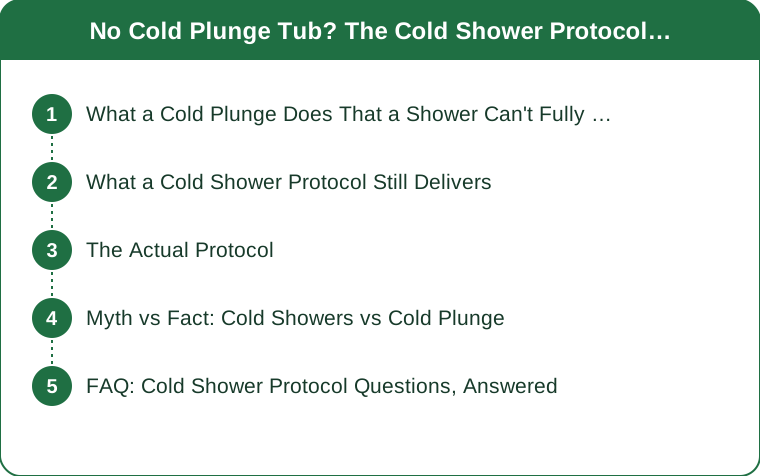
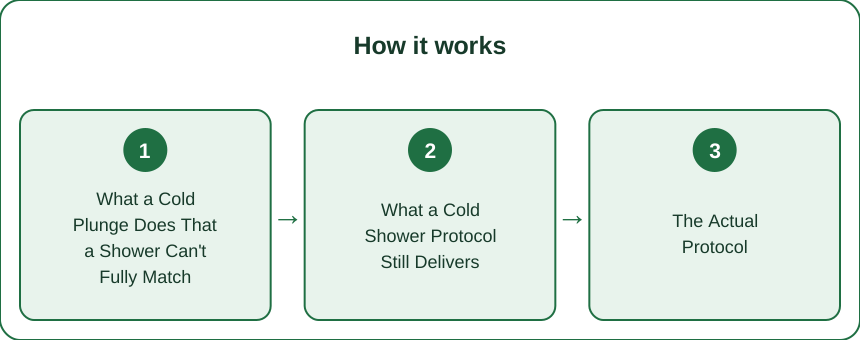
What a Cold Plunge Does That a Shower Can’t Fully Match
Full immersion submerges your entire body at once, including areas a shower stream never directly hits with full pressure, and reaching genuinely cold water temperatures (typically 50-59°F) is more consistent in a dedicated tub than most home water heaters or shower systems allow, since tap water rarely drops below the low 50s even in winter for most households. Deep, sustained immersion also triggers a stronger, more complete cold-shock response because the entire nervous system’s cold receptors activate simultaneously rather than the more gradual, partial activation a shower stream produces.
What a Cold Shower Protocol Still Delivers
Even a shorter, shower-based cold exposure still activates the same core physiological response: a spike in norepinephrine associated with alertness and mood improvement, along with the mental discipline benefit of doing something uncomfortable on purpose each morning. Research on shower-based cold exposure specifically has shown measurable mood and alertness improvements, even without full immersion, which is a meaningfully different claim than assuming a shower does ‘nothing’ just because it’s not a true plunge.

The Actual Protocol
Take your normal shower as usual, then in the final 60-90 seconds, turn the temperature to the coldest setting and stay under the stream, moving to expose different parts of your body (shoulders, back, chest) rather than standing still and only getting cold water on your front. Breathe slowly and steadily rather than gasping — controlling the breath is most of the mental battle, and gasping actually shortens how long most people can tolerate the cold. Build up gradually: start with 20-30 seconds in week one and add 15-20 seconds each week, rather than jumping straight to a full 90-second finish on day one.
Myth vs Fact: Cold Showers vs Cold Plunge
Myth: a cold shower is basically pointless without a real plunge tub. Fact: multiple studies on shower-based cold exposure protocols specifically have shown real, measurable benefits for mood and alertness — it’s a smaller dose of the same mechanism, not a completely different one that only starts working once you own equipment.
Myth: you need freezing water for it to count. Fact: even a shower running at the coldest tap setting (often 55-65°F depending on your water source and season) is enough to trigger the norepinephrine response that people are actually after, without needing to add ice or hit the same extreme temperatures as a dedicated plunge tub.
Myth: longer is always better once you’re used to it. Fact: benefits plateau well before extreme durations, and pushing past 2-3 minutes in a cold shower mainly adds discomfort without a proportional increase in the alertness or mood benefit — the protocol’s short duration isn’t a compromise, it’s close to the point of diminishing returns anyway.
FAQ: Cold Shower Protocol Questions, Answered
How long before I feel the alertness benefit kick in?
Many people notice a mental alertness shift within the first 1-2 weeks of consistent daily practice, even at short durations — consistency matters more than duration when you’re starting out, and the habit of doing something deliberately uncomfortable each morning carries its own separate psychological benefit beyond the physiological one.
Is it safe to do a cold shower every single day?
For most healthy adults, yes — but anyone with a heart condition, high blood pressure, or who’s pregnant should check with a doctor first, since cold exposure does cause a real spike in heart rate and blood pressure. This is general information, not medical advice.
Should I do the cold shower before or after my workout?
After a workout is generally preferred if muscle recovery is your goal, since some research suggests cold exposure immediately before strength training may blunt muscle-building signaling — for a general energy and mood boost, morning timing works well regardless of workout schedule, since the goal there is alertness rather than recovery specifically.
Will a cold shower actually help with soreness the way a cold plunge is said to?
It can provide some relief for general post-exercise soreness, though the effect is milder than full immersion simply because less of the body is exposed to the cold at full intensity at any one moment — treat it as a smaller-scale version of the same recovery tool, not an equally powerful substitute for a dedicated plunge session.
TL;DR:
- A cold shower can’t fully replicate deep full-body immersion, but it triggers the same core alertness response
- End your normal shower with 60-90 seconds at the coldest setting, moving to expose different body parts
- Start at 20-30 seconds and build up gradually week by week
- Benefits plateau well before extreme durations — the short protocol isn’t a compromise
- Consistency matters more than duration or temperature for feeling the benefit
If you’re not sure a cold plunge tub is worth the investment yet, the shower protocol is the honest way to test whether you’ll actually stick with cold exposure before spending the money.
Keep Reading
This article is for general informational purposes only and is not medical advice. Always consult a qualified health professional for guidance specific to you.