How Cold Does a Cold Plunge Actually Need to Be to Work?
Quick Answer: Most benefits (alertness, mood lift, some recovery support) show up in the 50-59°F (10-15°C) range for 2-5 minutes — you don’t need the extreme sub-40°F plunges that go viral online. Beginners should start at the warmer end and build tolerance over several sessions.
The viral cold plunge videos show people gasping in near-freezing water, which makes 50-59°F feel like cheating. It isn’t — that range delivers most of the studied benefits with far less risk.

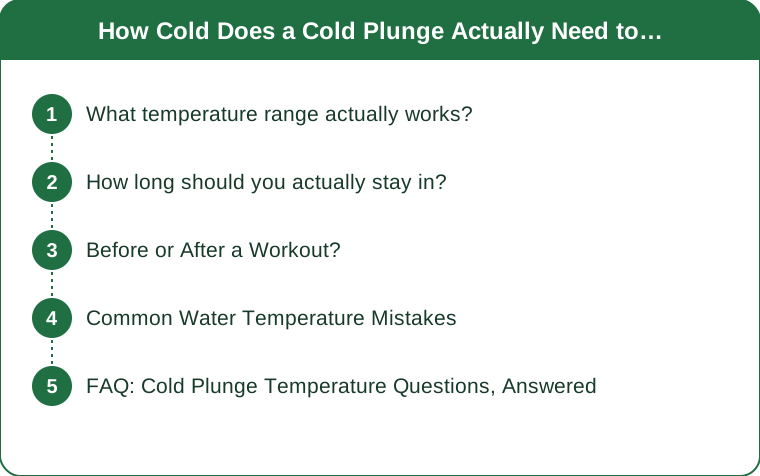
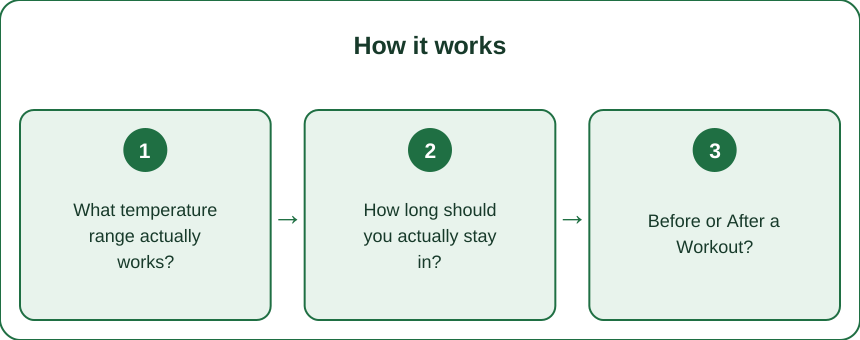
What temperature range actually works?
50-59°F (10-15°C) is the range used in most studies showing mood, alertness, and mild recovery benefits. Going colder doesn’t add proportional benefit — it mainly adds risk and discomfort, especially for beginners without medical clearance for extreme cold exposure.
How long should you actually stay in?
2-5 minutes is the typical effective window. Past about 10-15 minutes, the risk of excessive core temperature drop increases without added benefit — this isn’t an endurance contest, and longer isn’t better past the sweet spot.

Before or After a Workout?
Cold plunging right after strength training may blunt some muscle-building adaptations if done too soon — waiting a few hours, or plunging on a separate day, preserves more of the training benefit while still getting recovery perks like reduced soreness perception.
Common Water Temperature Mistakes
The two most common mistakes run opposite directions: going too cold too fast (spiking stress response and cutting the session short from discomfort), and going too warm to feel productive (missing the actual physiological trigger). 59°F for your first 5 sessions, then adjust based on how you tolerate it, avoids both.
FAQ: Cold Plunge Temperature Questions, Answered
Is 40°F water necessary for real benefits?
No — 50-59°F delivers most documented benefits with meaningfully lower risk, especially for anyone new to cold exposure.
How do I measure my plunge temperature accurately?
A simple pool or aquarium thermometer (under $10) is accurate enough — guessing by feel is unreliable since perceived cold varies a lot by ambient air temperature.
Is cold plunging safe for everyone?
No — anyone with heart conditions, uncontrolled blood pressure, or circulation issues should check with a doctor first, since cold shock significantly raises heart rate and blood pressure briefly. This is general information, not medical advice.
TL;DR:
- 50-59°F for 2-5 minutes delivers most of the studied benefits — no need for extreme cold
- Longer than 10-15 minutes adds risk, not benefit
- Separate plunging from strength training by a few hours to protect muscle gains
- Start at the warmer end of the range and adjust with experience
The viral extreme-cold plunges make for good video, but the moderate range is where the real benefit lives.
Keep Reading
This article is for general informational purposes only and is not medical advice. Always consult a qualified health professional for guidance specific to you.