The Ten Minutes After a Cold Plunge Matter More Than the Plunge
Quick Answer: Core temperature continues falling for 10 to 30 minutes after you exit - the afterdrop - because cold blood from your limbs returns to your core once circulation reopens. Get dry immediately, dress from the core outward, move gently rather than vigorously, and drink something warm. Do not go straight into a hot shower, and never plunge alone.
The part everyone plans is the getting in. The part that actually determines whether you feel sharp and warm at 9am or shivering and slightly unwell at 9:20 is what happens in the ten minutes after you climb out.

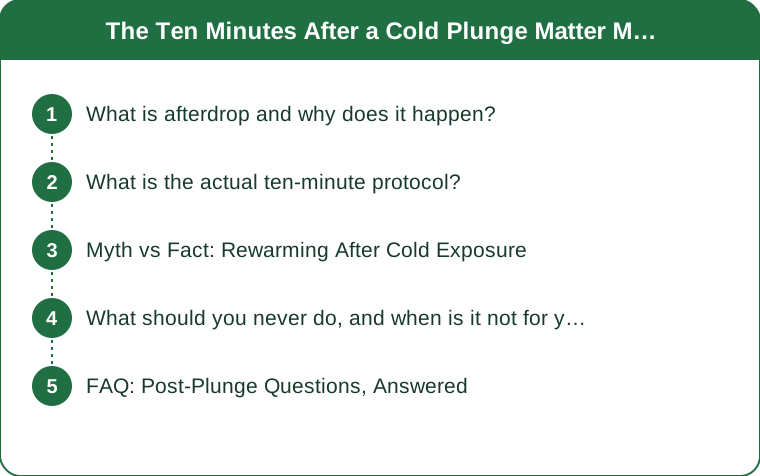
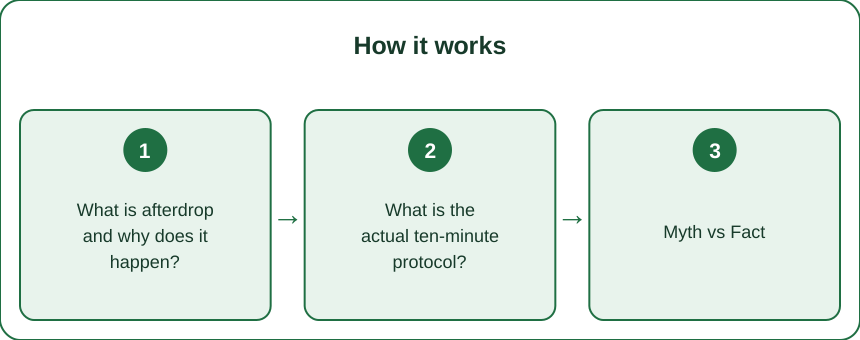
What is afterdrop and why does it happen?
Afterdrop is the continued fall in core temperature after you leave cold water, and it is why the coldest you feel is often several minutes after you are out and dry.
Two mechanisms produce it.
Circulatory afterdrop. In cold water your body constricts blood vessels in the skin and limbs to protect the core, so cold blood is largely held out at the periphery. When you get out and warm up, those vessels reopen and that cold peripheral blood returns to circulation and passes through the core. Core temperature drops as a result - sometimes by a meaningful amount - and this is why vigorous rewarming can make things worse rather than better.
Conductive afterdrop. Heat continues to move down the temperature gradient from your warm core toward your still-cold outer tissues, simply because physics does not stop when you climb out.
The timing: the drop typically continues for 10 to 30 minutes and depends on water temperature, exposure time, and body composition. Longer and colder exposures produce a larger, later afterdrop.
What it feels like: intense shivering that starts a few minutes after exiting, feeling colder than you did in the water, clumsy hands, and occasionally a wave of nausea or dizziness. Shivering after exit is normal and expected - it is your body generating heat. What is not normal is shivering that is uncontrollable, confusion, slurred speech, or difficulty with simple tasks. Those indicate the drop has gone too far and need warm shelter and help immediately.
What is the actual ten-minute protocol?
Order matters more than any single item.
Minute 0 to 1: get dry, fast. Wet skin loses heat rapidly through evaporation. Towel off completely, including hair, before you think about anything else. Have the towel within arm’s reach before you get in, not in a bag.
Minute 1 to 3: dress from the core outward. Warm dry layers on the torso first - a thermal top, then a fleece or down layer - then a hat, then bottoms, then socks and shoes. The core is what you are protecting; extremities can wait thirty seconds. A hat matters more than people expect.
Minute 3 to 6: gentle movement. Walking, easy arm swings, or a slow squat pattern. The goal is mild heat generation, not exertion. Do not do burpees or sprint - vigorous exercise pumps cold peripheral blood back to the core faster and deepens the afterdrop, which is the opposite of what you want.
Minute 6 to 10: something warm to drink. The thermal contribution is small but the internal warmth is genuinely useful, and holding a warm cup warms cold hands. Skip alcohol entirely - it dilates peripheral vessels and accelerates heat loss while making you feel warmer, which is a dangerous combination.
And sit down for the first minute if you feel at all lightheaded. Blood pressure changes on exiting cold water are real, and standing up quickly from a cold plunge is a genuine faint risk.

Myth vs Fact: Rewarming After Cold Exposure
Myth: A hot shower straight afterwards is the best way to warm up. Fact: It is the most common mistake. Hot water rapidly dilates peripheral vessels, dumping cold blood into the core and deepening the afterdrop, and the sudden temperature swing puts additional load on the cardiovascular system. Wait 15 to 20 minutes and start warm, not hot.
Myth: If you are shivering, you did it wrong. Fact: Shivering is normal thermogenesis and part of the response. Uncontrollable shivering, confusion, or difficulty speaking is a different matter and needs immediate warming and assistance.
Myth: Vigorous exercise is the fastest way to warm up. Fact: Moderate movement helps; hard exercise accelerates the return of cold blood to the core. Gentle is deliberate here, not cautious.
Myth: The longer you stay in, the better the benefit. Fact: Most of the documented responses occur within the first two to three minutes at genuinely cold temperatures. Longer exposures increase risk substantially without a proportional benefit, and this is where people get into trouble.
Myth: You get used to it and the afterdrop stops. Fact: Habituation reduces the initial cold shock response considerably, which is real and useful. The afterdrop is a thermal physics problem and it does not habituate - experienced cold water swimmers manage it, they do not outgrow it.
What should you never do, and when is it not for you?
A short list, and it is worth taking seriously because cold water is the rare wellness practice with genuine acute risk.
Never plunge alone, particularly in open water. Cold shock can cause involuntary gasping in the first seconds, and reduced muscle function follows within minutes. Someone should be present and able to help.
Never plunge after drinking alcohol. It impairs judgement, blunts the perception of cold, and accelerates heat loss.
Do not drive immediately afterwards. Give it 20 to 30 minutes. Cold hands, slower reaction times, and afterdrop dizziness are a poor combination behind the wheel.
Do not go straight into a sauna. Sauna after cold is a traditional pairing, but going in while your core is still dropping stresses the cardiovascular system considerably. Rewarm partially first.
And it is not for everyone. Speak to a doctor before starting if you have any heart condition, arrhythmia, high or poorly controlled blood pressure, Raynaud’s, a history of fainting, are pregnant, or have any condition affecting circulation or temperature regulation. Cold water immersion places acute demand on the cardiovascular system, and the cold shock response is not trivial. This is general information, not medical advice.
Start conservatively. Cooler showers first, then short immersions of 30 to 60 seconds, then build. There is no benefit that requires you to start at ten minutes.
FAQ: Post-Plunge Questions, Answered
How long does afterdrop last?
Core temperature typically continues falling for 10 to 30 minutes after exit, with longer and colder exposures producing a deeper and later drop.
Should you take a hot shower after a cold plunge?
Not immediately. Wait 15 to 20 minutes and use warm rather than hot water. A hot shower straight after deepens the afterdrop and stresses the cardiovascular system.
Why do I shiver more after getting out than while I am in?
Because cold blood held in your limbs returns to your core once circulation reopens, and heat continues moving outward from the core. The coldest point is usually several minutes after you are out.
TL;DR:
- Core temperature keeps dropping for 10 to 30 minutes after exit - that is the afterdrop.
- Dry immediately, layer the core first, add a hat, then move gently.
- No hot shower for 15 to 20 minutes, no alcohol, no driving straight away.
- Never plunge alone, and check with a doctor first if you have any cardiac or circulatory condition.
The cold part is the part you brag about. The ten minutes afterwards is the part that decides how the rest of your morning goes.
Keep Reading
This article is for general informational purposes only and is not medical advice. Always consult a qualified health professional for guidance specific to you.